






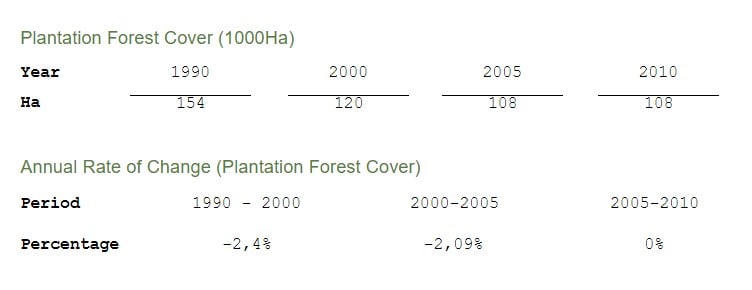
According to the U.N. FAO, 40% or about 15 624 000 hectares of Zimbabwe is forested. Of this 5.1% is classified as primary forest and is most biodiverse and carbon dense form of forest. Currently Zimbabwe has 108 000 hectares of planted or exotic forests. Major role players in the industry include Allied Timbers, Border Timbers, Wattle Company, Hunyani Forests, and Mutare Board and Paper Mills. This article will look at the origins of tree plantations in Zimbabwe, the expansion of the industry, present challenges and the future outlook.
Origins of tree plantations in Zimbabwe
The Rhodesian timber industry began in 1908 with exploitation of indigenous hardwoods forest in western Matabeleland. Demand for timber included railway sleepers, construction, mining and furniture. Indigenous trees were slow growing (150 years) and demand was fast outstripping supply. Hence by 1910 the fast-growing exotics from Australia were introduced. By 1920, 1200 hectares had been planted by farmers. In 1923, Forestry Commission then known as the Forest Division of the Department of Agriculture began plantings at Mtao Forest near Mvuma. According to the Tree Society of Zimbabwe 2003 publication, some of the early tree plantings were established by the Railways of Rhodesia for the purpose of supplying railway sleepers and firewood. Many of such plantations were established between Fort Victoria (Masvingo) and Salisbury (Harare) and between Gwelo (Gweru) and Heaney. Large scale pine tree plantings were pioneered by the Forestry Commission at Stapleford Forest in 1926. This positive afforestation trend continued in the 1930’s and 40’s with wattle being introduced in the eastern districts during this period. The Wattle Company was established in 1945 for the purposes of expanding the wattle extracts industry.
By 1950,25 000 hectares had been planted by the Forestry Commission and other Private players. The decade 1950 to 1960 was a period of major expansion for Rhodesian tree plantations which totalled 83 000Ha by 1960 (37 000Ha Pines, 28 000 Wattle and 18 000Ha gum trees). At that point in time the forestry and sawmilling industry in Rhodesia was worth $US50 million.
Trends:
Trends in Plantation forest area, 1990 – 2010:
Forest Ownership:

Employment in forestry 1990-2005:

Challenges
According to the Timber Producers Federation (TPF) presentation at the National Consultative Dialogue Workshop on Land tenure and Policy in Zimbabwe held at the HICC in February 2018. The Zimbabwean forestry industry faces a wide variety of difficulties, ranging from wild fires, land invasions/encroachments, brain drain, baboon damage, conflicting national legislation, siltation in rivers and destruction of forest businesses. TPF is the mouth piece of forestry plantation companies, wood treatments plants and sawmilling companies in Zimbabwe. Amongst these challenges include conflicting National legislation. For example, the Mines and Minerals Act vs Forest Act, were by special mining grants were offered in Gazetted Forests such as Tarka and Maswera. The Traditional and Local leadership Act allows settlements in Gazetted Forests and Plantation which resulted in plantations such as Martin in Chikukwa being occupied by settlers, Tarka Forests in Ngoma, Gwendingwe Forest in Muusha and Cashel Estate in Mutambara.
The consequence of policy inconsistences above include new human settlements in plantations, land use change from forestry to agriculture, uncontrolled fires, illegal harvesting of timber, stray livestock damaging young trees, siltation of rivers due to gold panning, a very high TU that is temporary unplanted area which rose up to 40 000 hectares or 32.5% in 2015, and the destruction of forestry businesses and livelihoods The industry also lost many experienced and talented foresters to neighbour countries or abroad. What was lost is not only the skills but the relationships, connectivity and goodwill associated with doing business between two organisations and its people. General labour was also difficult to source during the same period, with labour trucks travelling far and wide to fetch manpower. The minimum wage for farm labour was always eroded by high inflation leaving very little to spend on basics hence many rural folks living close to plantations would opt to go the self-employment route. Lastly the volatile exchange rate made it difficult to source machinery spares and also sustain the profitability of export timber commodities.
Outlook
Having read through the annual financial reports of some of the leading role players in the Zimbabwean forestry industry and recommendations from the Timber Producers Federation report, the following is a brief outlook for the industry;
The industry in 2020 incurred disruptions in productions and bottlenecks caused by Covid-19 lockdowns restrictions. However, these restrictions are currently being eased in many countries across the globe hence demand for timber both locally and abroad is set to increase in 2021.
The industry should continue to lobby government for more secure land tenure, with at lease 3 rotations (75 years) accorded.
Settlements in plantations should be stopped. Forests should not be regarded as excess land that can be called up to grow food crops.
Were feasible with the right procedures being followed, there is room to expand the industry hectarage wise by focusing afforestation on the silviculture zones 2 and 3 outside the Manicaland province. The resuscitation of Pulp and Paper markets such as Hunyani in the town of Norton to absorb the timber grown in the zones 2 and 3 would be a ready welcome move as the mill is located in a central position distance wise.